Buying olive oil in the supermarket can feel like a maze. Terms like extra virgin, cold pressed and mild are thrown at you, but what do they really mean? In this guide you’ll learn what to look for when buying olive oil, so you come home with the best product for your needs.
TL;DR: quick guide – what to look for when buying olive oil?
No time to read the whole article? Keep these points in mind when buying olive oil and you’ll almost always get it right:
- Know the producer: trust is everything. Know who makes the oil and whether they put real love into their craft
- Extra virgin only: the highest grade. Avoid ‘Pure’, ‘Mild’ or ‘Classico’; these are often chemically processed
- The origin: look for a specific country or region (such as Crete, Greece). Does it say “Blend of oils from the EU”? Then it’s often a mass-produced product without character
- Dark glass or a tin: avoid clear bottles, and plastic is an absolute no-go. Light is olive oil’s biggest enemy and turns it rancid
- The price: making genuine extra virgin olive oil is a costly process. Does the extra virgin olive oil cost less than €15 per litre? Then the chance of top quality is very small
- Explanation of the production process: this should be honest, open and innovative!
- Check the harvest date: it’s good to know when the olive oil was produced. Olive oil doesn’t get better with age; fresh is best
What to look for when buying olive oil? Let’s dive in!
1. The producer: trust as the foundation
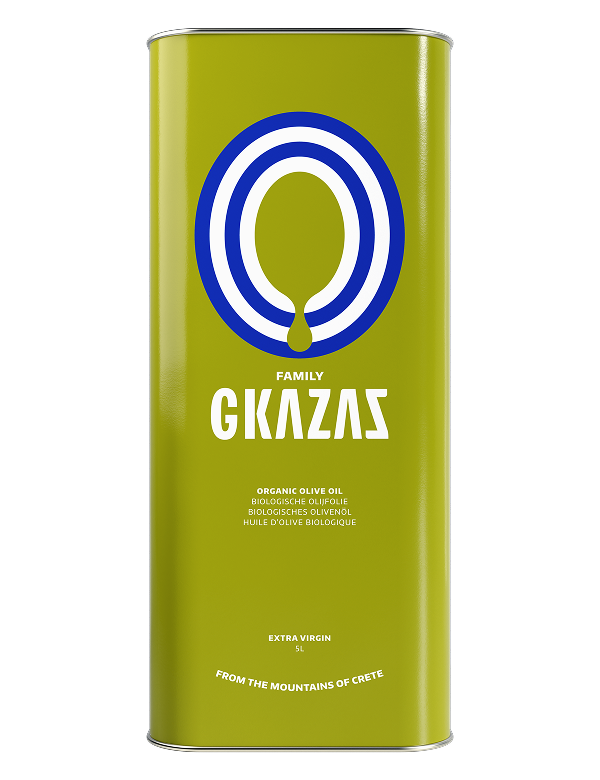
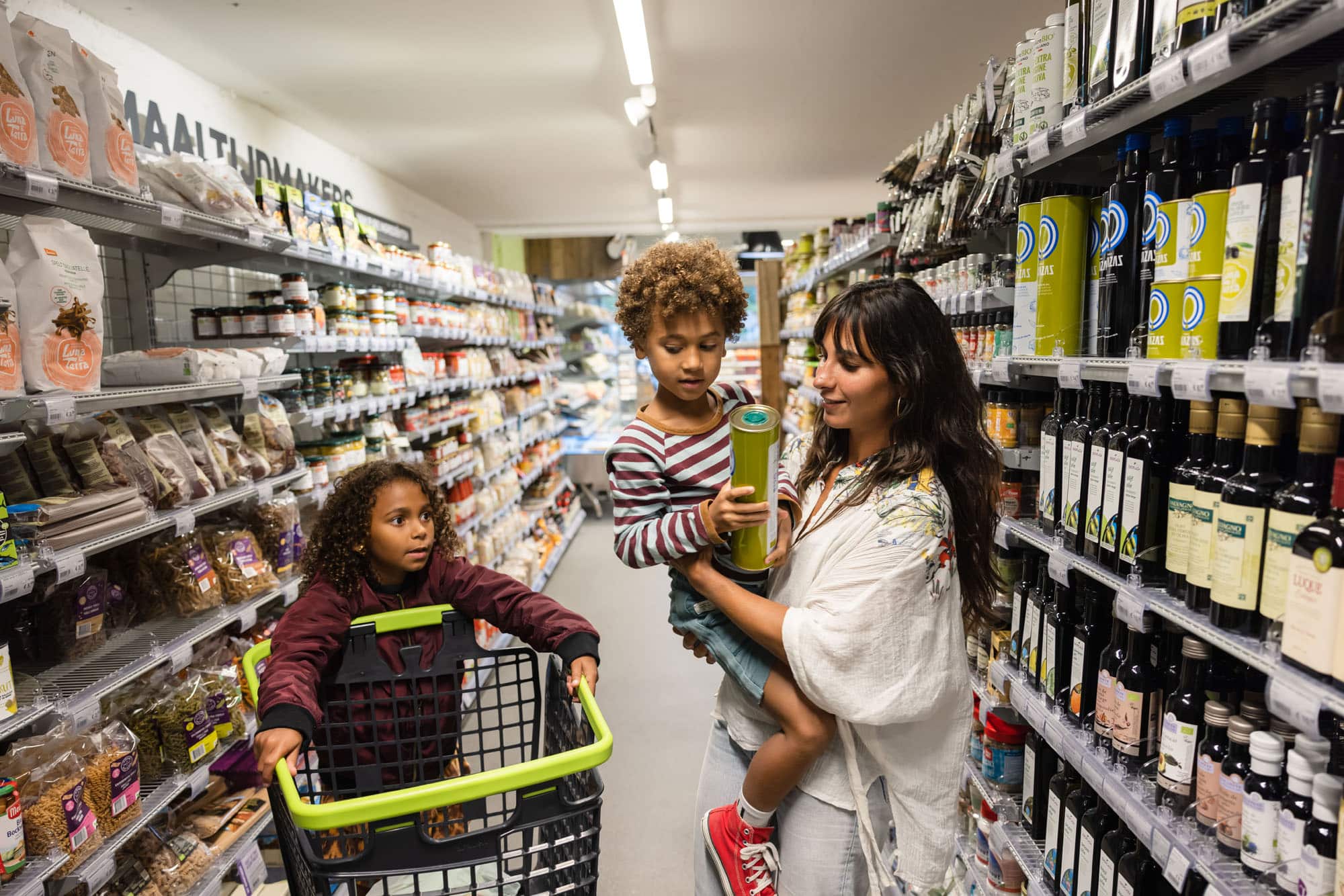
The most important thing with olive oil is that you can trust the producer. You want the certainty that they work with passion and integrity to get the finest possible oil into the bottle or tin. At Gkazas we believe in transparency. We work fairly with Cretan farmers. On top of that, we test all of our extra virgin olive oils so we know for sure they are of the highest quality.
2. The grade: focus on extra virgin
If you’re after the best flavour and the most nutrients, extra virgin olive oil is the type of olive oil that best suits your needs. Does the label say ‘Pure’, ‘Mild’, ‘Classico’ or simply ‘Olive oil’? Then you’re often dealing with oil that has been heavily chemically processed to mask defects. Note that refined olive oil isn’t always a bad thing, because refining can also be done in a natural way.
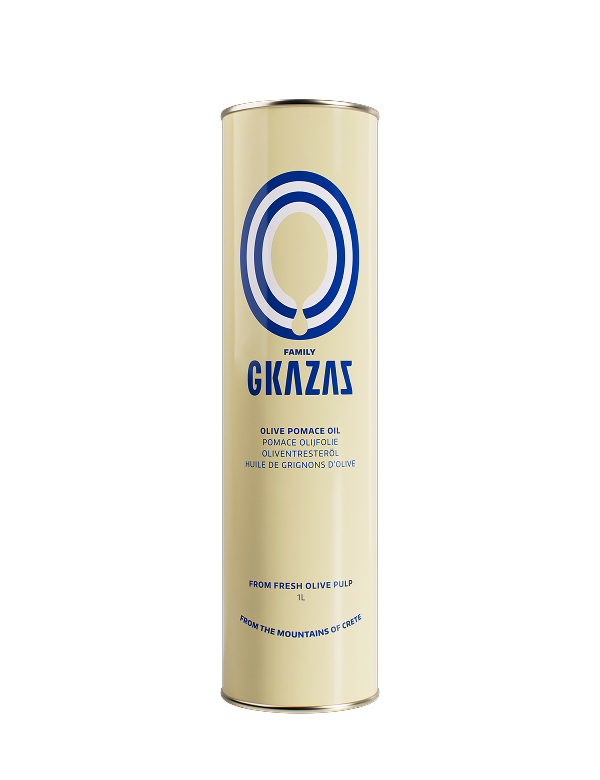
Worth mentioning: if you want a more economical choice, pomace olive oil is a good option. We make our pomace olive oil in a natural way. For extra flavour and nutrients, we add our organic extra virgin olive oil. A 100% pure and natural product, in which nothing of the original product goes to waste!
3. Origin: go for single origin
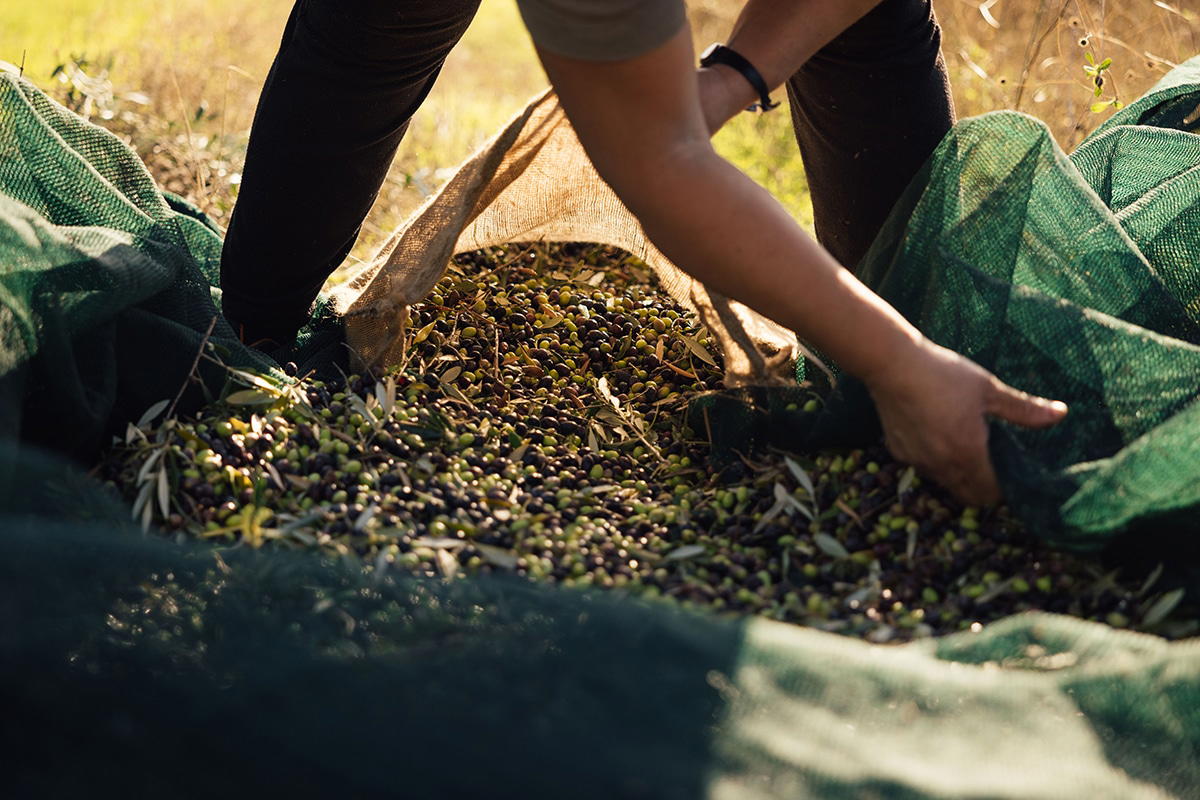
Good olive oil has character, and that comes from the soil. Look for a specific country or, even better, a specific region. Our olives grow exclusively on the sunny slopes of Crete, Greece. This is indicated by ‘single origin’ on our products. If you see an olive oil labelled as a “Blend of oils from the EU”, it’s often a mass-produced product without character.
You’ll often see the abbreviations PDO (Protected Designation of Origin) or PGI (Protected Geographical Indication). These guarantee that the oil really comes from the region stated on the label and has been produced according to strict traditions. So these are labels worth looking for too.
4. Packaging: air, light and heat
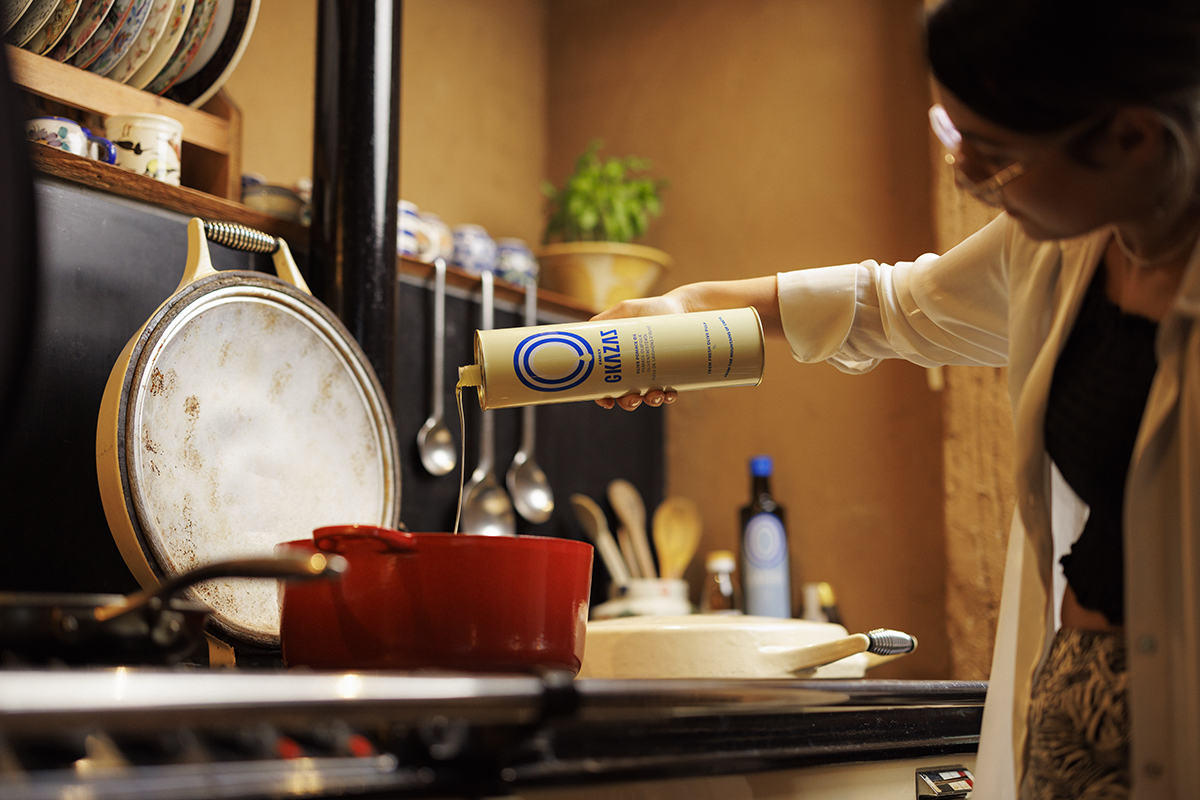
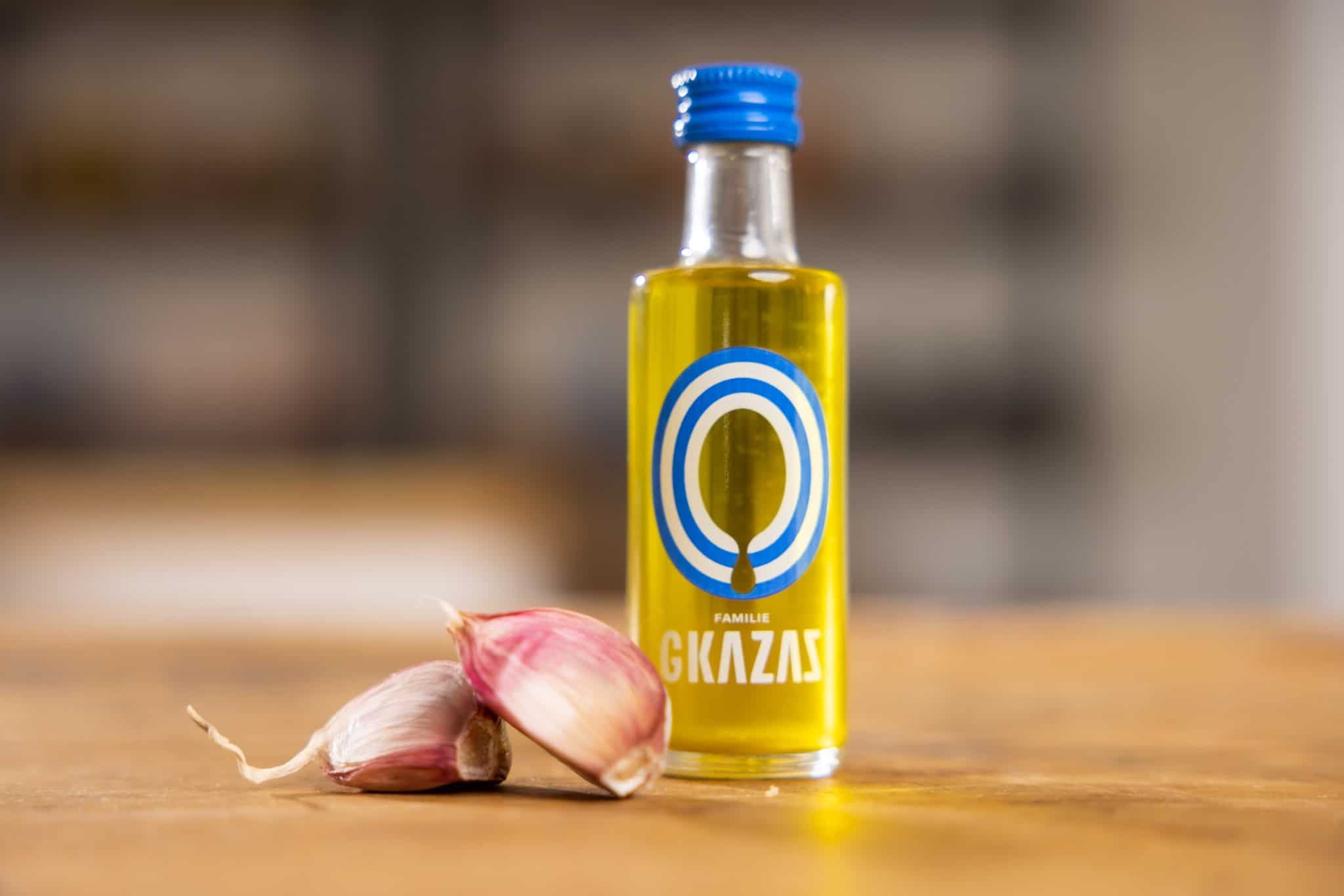
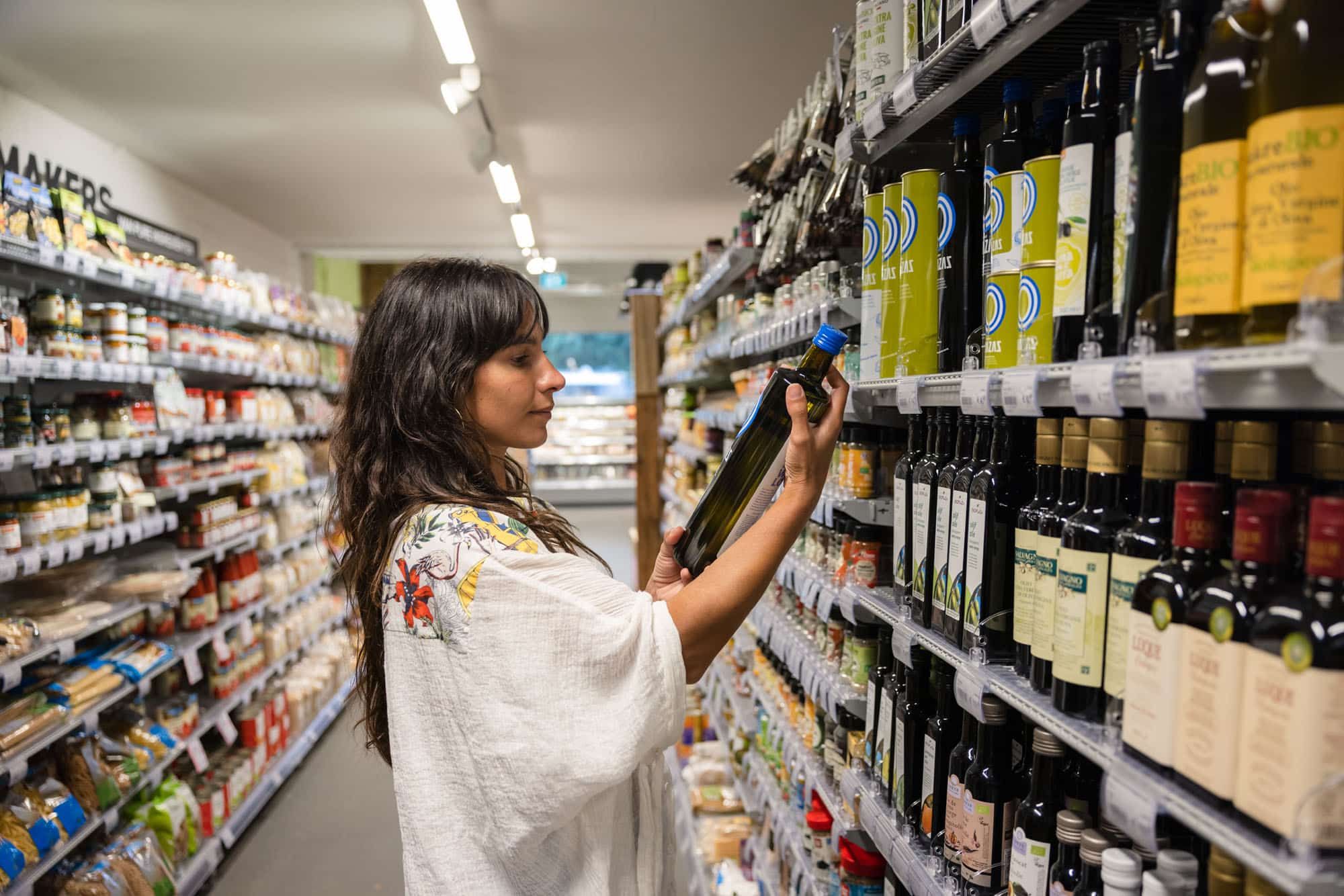
Olive oil oxidises (goes off) because of light, air and heat. A clear bottle on a brightly lit shelf is a red flag. Choose olive oil in dark glass or in a tin. At home, store your oil in a cool, dark place too (not right next to the cooker!). Here you’ll find an article about the oxidation of olive oil and storing olive oil.
5. The price of quality
Let’s be honest: producing a litre of genuine extra virgin olive oil is a costly and labour-intensive process. If you see a bottle in the shop for less than €15 per litre, you have to ask yourself where corners were cut. The lower the price, the bigger the chance of an inferior or blended product.
6. An honest and open production process
Innovation and tradition should go hand in hand. A good producer is open about how the oil is produced, from tree to table. This should be done honestly and innovatively, without the use of heat or chemicals. That way you make sure that most of the flavour and nutrients are preserved and that the olive oil keeps for as long as possible.

7. Freshness: the harvest date and best-before date
Every bottle or tin of olive oil has a best-before date. This says something about the harvest date, otherwise the olive oil wouldn’t keep (for long). A high-quality oil starts to lose its quality (flavour and nutritional value) around 18 months after the harvest. Contrary to what some people think, olive oil does not get better with time. Fresh is always best. So always check the harvest date, so you know when the oil was produced.
If you want to check the harvest year of the olive oil, you can find it in the batch code on the bottom of the tin or on the top of the tin/bottle. After the first two letters you’ll see the year in which the olive oil was bottled.
Essential olive oil terms: a glossary
To become a true connoisseur, you need to speak the language of the label. What to look for when buying olive oil? Here are the most important terms:
- Extra virgin: the king of olive oils. This is the first pressing of the olives, obtained purely mechanically without heat or chemicals. It has to meet strict requirements for taste, aroma and low acidity.
- Koroneiki olive: the queen of Greek olives. This small olive is known worldwide for its high concentration of polyphenols and its robust, fruity flavour profile. It’s the basis of our olive oil and gives it that unique Cretan quality.
- Cold pressed/cold extracted: this means the temperature during pressing never rose above 27°C. This is crucial, because at higher temperatures the delicate aromas evaporate and healthy antioxidants are lost.
- Acidity: a chemical quality indicator. A low acidity (below 0.8%, but often below 0.3% for top oils) shows that the olives were healthy and were processed immediately after picking.
- Organoleptic analysis: a fancy word for a quality assessment. We have this done by a lab. They determine whether the olive oil is free of defects and has the right fruitiness, bitterness and pungency. Only when an oil is perfect both chemically and organoleptically may it carry the title extra virgin. In practice, however, acidity alone is often used to indicate quality.
- Polyphenols: these are the powerful antioxidants in olive oil. They’re very good for your heart and blood vessels and give the oil that characteristic ‘kick’ at the back of the throat and a slight bitterness on the tongue. The fresher the oil, the more polyphenols.
- Single origin: this indicates that the olive oil comes from one specific area or country (like our Cretan oil). It guarantees an authentic flavour profile, unlike cheap blends.
- PDO & PGI: European quality labels that protect the origin. PDO means that everything (production, processing, preparation) takes place in one area. PGI is slightly less strict, but still guarantees a strong link with the region.
- Pomace olive oil: oil made from the pulp that remains after the first pressing. At Gkazas we make this 100% naturally and blend it with extra virgin oil for an honest, affordable and flavourful product.
- Refined oil: oil that has been treated to remove faults in smell or taste. This can be done naturally, as with our pomace olive oil, but is often done with chemical agents such as hexane. It’s often colourless and tasteless until extra virgin oil is added (it’s then often called ‘mild’ or ‘pure’).